Knowledge Hub

How Many Tons of Asphalt in a Cubic Yard? Conversion Guide

Learn how many tons of asphalt are in a cubic yard, how asphalt density affects conversion, and how to calculate asphalt tons from cubic yards with formulas, examples, and tables.

Guide
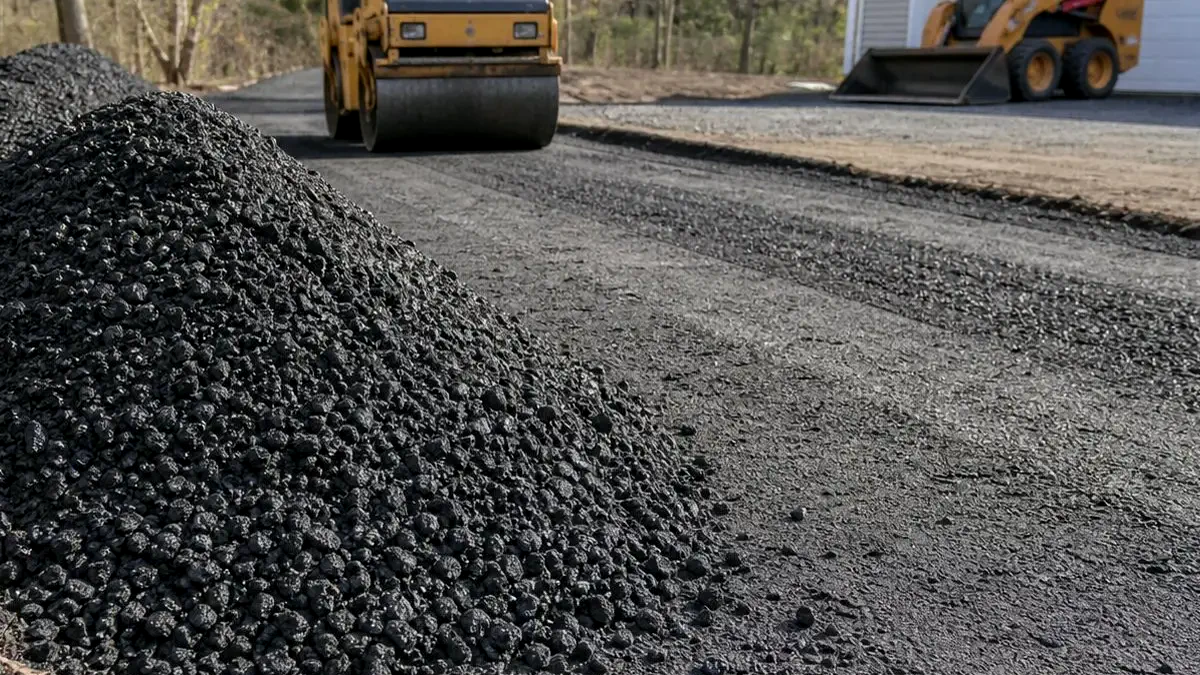
Compacted asphalt millings used to explain cubic yard to ton conversion
Cubic yard to ton conversion depends on asphalt density, compaction, and whether the material is hot mix or millings.

If you are planning an asphalt driveway, road repair, parking lot, trench reinstatement, or paving job, one question comes up again and again:

How many tons of asphalt are in a cubic yard?

The quick answer is:

One cubic yard of compacted asphalt usually weighs around 1.9 to 2.1 tons, depending on the asphalt mix density.

For most quick estimates, many contractors and calculators use around:

1 cubic yard of asphalt ≈ 2 tons

This is a useful rule of thumb.

But it is not always exact.

Asphalt weight depends on density, mix type, compaction level, moisture, aggregate size, and whether the material is loose or compacted. That is why a proper cubic yard to tons calculation should use density.

In this guide, you will learn the simple formula, conversion tables, worked examples, and common mistakes to avoid.

You can also use the Asphalt Tonnage Calculator on BitumenCalc to calculate tons automatically.

Quick Answer: How Many Tons of Asphalt Are in a Cubic Yard?

A cubic yard of asphalt normally weighs about 1.9 to 2.1 short tons.

A practical estimate is:

Asphalt Volume Approximate Weight
1 cubic yard 1.9–2.1 tons
2 cubic yards 3.8–4.2 tons
5 cubic yards 9.5–10.5 tons
10 cubic yards 19–21 tons

The most common simple conversion is:

Cubic Yards × 2 = Asphalt Tons

Example:

5 cubic yards × 2 = 10 tons

This gives a fast estimate. For better accuracy, use asphalt density.

Why Asphalt Is Converted from Cubic Yards to Tons

Asphalt is measured in volume during design but often sold by weight.

That creates a common problem.

You may measure your project in cubic yards, but the supplier may quote asphalt in tons.

For example:

  • Driveway volume may be calculated in cubic yards.
  • Asphalt plant may price the material per ton.
  • Truckload capacity may be listed in tons.
  • Project cost may depend on total tonnage.

So, if you know the cubic yards but not the tons, you need a conversion.

The basic idea is simple:

Weight = Volume × Density

But the exact answer depends on which density value you use.

Asphalt Cubic Yard to Tons Formula

To convert asphalt cubic yards to tons, use this formula:

Tons = Cubic Yards × Asphalt Density lb/yd³ ÷ 2000

Because one short ton equals 2,000 pounds.

If you use density in pounds per cubic foot, first convert cubic yards to cubic feet.

Since:

1 cubic yard = 27 cubic feet

The formula becomes:

Tons = Cubic Yards × 27 × Density lb/ft³ ÷ 2000

For compacted asphalt, a common density estimate is around 145 lb/ftÂł.

So:

Tons = 1 × 27 × 145 ÷ 2000 Tons = 1.9575

That means:

1 cubic yard of asphalt ≈ 1.96 tons

Rounded estimate:

1 cubic yard ≈ 2 tons

Simple Rule of Thumb

For quick planning:

1 cubic yard of asphalt = about 2 tons

This rule is easy and useful.

But use it only for rough estimates.

Use Case Is 2 Tons per Cubic Yard OK?
Early project planning Yes
Driveway estimate Usually yes
Small repair estimate Usually yes
Contractor quote check Useful but not final
Official project quantity Use specified density
Asphalt plant order Confirm with supplier

If the project is large, even a small density difference can change the tonnage by several tons.

Asphalt Weight per Cubic Yard by Density

The table below shows how different asphalt density values affect weight.

Asphalt Density Tons per Cubic Yard
135 lb/ftÂł 1.82 tons
140 lb/ftÂł 1.89 tons
145 lb/ftÂł 1.96 tons
150 lb/ftÂł 2.03 tons
155 lb/ftÂł 2.09 tons
160 lb/ftÂł 2.16 tons

Most compacted asphalt estimates fall somewhere around 1.9 to 2.1 tons per cubic yard.

That is why “2 tons per cubic yard” is commonly used.

Cubic Yards to Asphalt Tons Conversion Table

Use this table for quick conversion.

It uses the common estimate:

1 cubic yard = 2 tons
Cubic Yards Approx. Asphalt Tons
0.5 ydÂł 1 ton
1 ydÂł 2 tons
2 ydÂł 4 tons
3 ydÂł 6 tons
4 ydÂł 8 tons
5 ydÂł 10 tons
6 ydÂł 12 tons
7 ydÂł 14 tons
8 ydÂł 16 tons
9 ydÂł 18 tons
10 ydÂł 20 tons
15 ydÂł 30 tons
20 ydÂł 40 tons
25 ydÂł 50 tons
50 ydÂł 100 tons

This is a good planning table.

For exact results, use your asphalt mix density.

More Accurate Cubic Yard to Tons Table

This table uses 145 lb/ftÂł, which gives about 1.96 tons per cubic yard.

Cubic Yards Asphalt Tons
1 ydÂł 1.96 tons
2 ydÂł 3.92 tons
3 ydÂł 5.87 tons
4 ydÂł 7.83 tons
5 ydÂł 9.79 tons
6 ydÂł 11.75 tons
7 ydÂł 13.70 tons
8 ydÂł 15.66 tons
9 ydÂł 17.62 tons
10 ydÂł 19.58 tons
15 ydÂł 29.36 tons
20 ydÂł 39.15 tons
25 ydÂł 48.94 tons
50 ydÂł 97.88 tons

The difference between this table and the simple 2-ton rule is small for small projects. But for large jobs, it matters.

Example 1: Convert 3 Cubic Yards of Asphalt to Tons

Let’s use the simple rule.

Cubic Yards × 2 = Tons

So:

3 × 2 = 6 tons

Estimated answer:

3 cubic yards of asphalt ≈ 6 tons

Now using a more accurate density of 145 lb/ftÂł:

Tons = 3 × 27 × 145 ÷ 2000 Tons = 5.87 tons

So the accurate estimate is about 5.87 tons, while the quick estimate is 6 tons.

That is close enough for rough planning.

Example 2: Convert 10 Cubic Yards of Asphalt to Tons

Using the simple rule:

10 × 2 = 20 tons

Using density:

Tons = 10 × 27 × 145 ÷ 2000 Tons = 19.58 tons

So, 10 cubic yards of asphalt is approximately 19.6 to 20 tons.

Example 3: Convert 25 Cubic Yards of Asphalt to Tons

Using the simple rule:

25 × 2 = 50 tons

Using 145 lb/ftÂł density:

Tons = 25 × 27 × 145 ÷ 2000 Tons = 48.94 tons

So, 25 cubic yards of asphalt is approximately 49 to 50 tons.

For a large project, confirm density with the asphalt supplier before ordering.

How to Calculate Cubic Yards of Asphalt First

Sometimes you do not know the cubic yards yet. You only know the project dimensions.

For example, you may know:

  • Length
  • Width
  • Asphalt thickness

To calculate cubic yards:

Cubic Yards = Length ft × Width ft × Thickness ft ÷ 27

Remember:

Thickness ft = Thickness inches á 12

Then convert cubic yards to tons:

Tons = Cubic Yards × 2

Or use density:

Tons = Cubic Yards × 27 × Density lb/ft³ ÷ 2000

Example 4: Driveway Asphalt Cubic Yards to Tons

Let’s say you have a driveway:

  • Length: 60 ft
  • Width: 12 ft
  • Thickness: 3 inches

Step 1: Convert Thickness to Feet

3 inches á 12 = 0.25 ft

Step 2: Calculate Cubic Feet

60 × 12 × 0.25 = 180 ft³

Step 3: Convert Cubic Feet to Cubic Yards

180 á 27 = 6.67 yd³

Step 4: Convert Cubic Yards to Tons

Using the simple rule:

6.67 × 2 = 13.34 tons

Using density:

6.67 × 27 × 145 ÷ 2000 = 13.05 tons

So, this driveway needs about 13 to 13.4 tons of asphalt.

Example 5: Parking Lot Asphalt Cubic Yards to Tons

A small parking area:

  • Length: 100 ft
  • Width: 50 ft
  • Thickness: 4 inches

Thickness in Feet

4 á 12 = 0.333 ft

Cubic Feet

100 × 50 × 0.333 = 1,665 ft³

Cubic Yards

1,665 á 27 = 61.67 yd³

Tons by Quick Rule

61.67 × 2 = 123.34 tons

Tons by Density

61.67 × 27 × 145 ÷ 2000 = 120.73 tons

So, this parking area needs around 121 to 123 tons of asphalt.

Asphalt Tons per Cubic Yard vs Tons per Square Foot

Cubic yards measure volume.

Square feet measure area.

You cannot convert square feet directly to tons unless you include thickness.

This is a common mistake.

Wrong:

Square feet = tons

Correct:

Square feet × thickness = cubic feet

Then:

Cubic feet × density = weight

Example:

A 1,000 ft² area at 3 inches thick:

Thickness = 3 ÷ 12 = 0.25 ft Volume = 1000 × 0.25 = 250 ft³ Tons = 250 × 145 ÷ 2000 = 18.13 tons

Without thickness, the tonnage cannot be calculated.

Asphalt Cubic Yard to Tons by Thickness

The table below shows estimated asphalt tons by area and thickness.

Density used: 145 lb/ftÂł

Area 2 in Thick 3 in Thick 4 in Thick
500 ft² 6.04 tons 9.06 tons 12.08 tons
750 ft² 9.06 tons 13.59 tons 18.13 tons
1,000 ft² 12.08 tons 18.13 tons 24.17 tons
1,500 ft² 18.13 tons 27.19 tons 36.25 tons
2,000 ft² 24.17 tons 36.25 tons 48.33 tons
5,000 ft² 60.42 tons 90.63 tons 120.83 tons

This table shows why thickness matters so much.

A 1,000 ft² area at 2 inches needs about 12 tons.

The same area at 4 inches needs about 24 tons.

That is double the material.

How Asphalt Mix Type Changes Weight

Not every asphalt mix has the same density.

Some mixes are denser because they contain smaller aggregate and fewer air voids. Others are lighter because of gradation, binder content, and compaction level.

Asphalt Type Weight Effect
Dense-graded asphalt Common standard estimate
Hot mix asphalt Usually dense after compaction
Cold mix asphalt May vary more
Recycled asphalt millings Often lighter and less uniform
Open-graded asphalt Can weigh less due to air voids
Stone mastic asphalt Can be dense depending on design

If you are working with recycled asphalt millings, do not assume the same weight as compacted hot mix asphalt.

For RAP and millings, use a calculator or supplier value when possible.

Loose Asphalt vs Compacted Asphalt

This is another important point.

Loose asphalt and compacted asphalt are not the same.

Loose asphalt is delivered before rolling and compaction. Compacted asphalt is the final paved layer after rolling.

The density changes because compaction reduces air voids.

Condition Meaning
Loose asphalt Material before compaction
Compacted asphalt Finished layer after rolling
Design thickness Usually compacted thickness
Delivered tons Based on plant weight

If your drawing says 3 inches compacted thickness, the contractor may need to place a slightly thicker loose layer before compaction.

For ordering, contractors usually work from tons, compaction factor, and plant tickets.

For planning, the 2 tons per cubic yard rule is still useful.

How Many Cubic Yards Are in One Ton of Asphalt?

Sometimes you need the reverse conversion.

If:

1 cubic yard ≈ 2 tons

Then:

1 ton ≈ 0.5 cubic yards

Using a more accurate value of 1.96 tons per cubic yard:

1 ton = 1 á 1.96 = 0.51 yd³

So:

1 ton of asphalt ≈ 0.5 cubic yards

This is useful when you know truckload tonnage but want to understand volume coverage.

Asphalt Tons to Cubic Yards Conversion Table

Using the common rule:

1 ton ≈ 0.5 cubic yards
Asphalt Tons Approx. Cubic Yards
1 ton 0.5 ydÂł
2 tons 1 ydÂł
5 tons 2.5 ydÂł
10 tons 5 ydÂł
15 tons 7.5 ydÂł
20 tons 10 ydÂł
25 tons 12.5 ydÂł
50 tons 25 ydÂł
100 tons 50 ydÂł

Again, this is a quick estimate. Use density for more accurate conversion.

How Many Tons of Asphalt Fit in a Dump Truck?

Dump truck capacity depends on truck size, local rules, axle limits, and material weight.

Common rough ranges:

Truck Type Approx. Asphalt Capacity
Small dump truck 5–10 tons
Single axle dump truck 5–8 tons
Tandem dump truck 10–15 tons
Tri-axle dump truck 15–20+ tons
Large dump trailer 20–25+ tons

If 1 cubic yard of asphalt weighs about 2 tons, then a 10-ton load is roughly 5 cubic yards.

But always follow local transport rules and supplier guidance.

Asphalt Cubic Yard to Tons for Cost Estimation

Once you convert cubic yards to tons, cost calculation is simple.

Cost = Tons × Price per Ton

Example:

  • Asphalt volume: 8 cubic yards
  • Conversion: 2 tons per cubic yard
  • Price: 120 per ton
Tons = 8 × 2 = 16 tons Cost = 16 × 120 = 1,920

Estimated material cost:

1,920

For complete project cost, include labor, equipment, base preparation, delivery, compaction, and site work.

You can use the Asphalt Cost Calculator to estimate cost more quickly.

How Much Area Does One Cubic Yard of Asphalt Cover?

Coverage depends on thickness.

Formula:

Coverage ft² = 27 ft³ á Thickness ft

Because:

1 ydÂł = 27 ftÂł

Coverage Table for 1 Cubic Yard

Asphalt Thickness Coverage from 1 ydÂł
1 inch 324 ft²
1.5 inches 216 ft²
2 inches 162 ft²
3 inches 108 ft²
4 inches 81 ft²
6 inches 54 ft²

This table is very useful for overlays and small paving jobs.

For example, 1 cubic yard of asphalt at 3 inches thick covers about 108 ft².

Since 1 cubic yard weighs about 2 tons, 2 tons of asphalt at 3 inches thick also covers about 108 ft².

How Much Area Does One Ton of Asphalt Cover?

Using the approximate rule:

1 ton ≈ 0.5 cubic yards

One ton is about:

0.5 × 27 = 13.5 ft³

Coverage formula:

Coverage ft² = 13.5 á Thickness ft

Coverage Table for 1 Ton

Asphalt Thickness Coverage from 1 Ton
1 inch 162 ft²
1.5 inches 108 ft²
2 inches 81 ft²
3 inches 54 ft²
4 inches 40.5 ft²
6 inches 27 ft²

So, one ton of asphalt covers about 54 ft² at 3 inches thick.

This is an estimate. Real coverage depends on density and compaction.

Metric Comparison: Cubic Meters to Tons

If you are working in metric units, asphalt is often calculated using cubic meters.

A common compacted asphalt density is:

2,300 to 2,450 kg/mÂł

Using 2,400 kg/mÂł:

1 cubic meter = 2.4 metric tons

Metric formula:

Metric Tons = Cubic Meters × Density kg/m³ ÷ 1000

Example:

5 m³ × 2400 ÷ 1000 = 12 metric tons

So:

5 cubic meters of asphalt ≈ 12 metric tons

Cubic Yard vs Cubic Meter

One cubic yard is smaller than one cubic meter.

Conversions:

1 cubic yard = 0.7646 cubic meters 1 cubic meter = 1.308 cubic yards

If asphalt density is 2,400 kg/mÂł:

1 yd³ = 0.7646 m³ Weight = 0.7646 × 2400 = 1835 kg

That is about:

1.835 metric tons

In short:

Volume Approx. Weight
1 cubic yard 1.8–1.9 metric tons
1 cubic meter 2.3–2.45 metric tons

Be careful with short tons and metric tons. They are not exactly the same.

Short Ton vs Metric Ton

In the United States, asphalt is often measured in short tons.

In many other countries, asphalt is measured in metric tons.

Unit Weight
1 short ton 2,000 lb
1 metric ton 1,000 kg
1 metric ton 2,204.62 lb
1 short ton 0.907 metric tons

When using online calculators, check whether the result is in short tons or metric tons.

This is especially important for international projects.

Common Mistakes in Asphalt Cubic Yard to Tons Conversion

Avoid these errors.

Mistake Why It Causes Problems
Assuming all asphalt weighs exactly 2 tons per ydÂł Good estimate, not exact
Ignoring thickness Cannot calculate tons from area alone
Mixing inches and feet Causes wrong volume
Confusing cubic yards with square yards Area and volume are different
Using loose density for compacted design May affect tonnage
Confusing short tons and metric tons Changes final weight
Not allowing waste May cause material shortage
Ignoring supplier density Official estimate may differ

The biggest mistake is mixing volume and area.

Cubic yards already include thickness. Square yards do not.

Should You Order Extra Asphalt?

For small jobs, it is common to allow a small waste or tolerance.

Typical waste allowance:

Project Type Suggested Extra
Simple rectangular driveway 3–5%
Irregular shape 5–8%
Patch repair 5–10%
Large commercial paving Based on engineer/supplier advice

Example:

If your estimate is 10 tons and you add 5%:

10 × 1.05 = 10.5 tons

That gives some safety for edges, uneven base, and minor measurement error.

Do not over-order without a plan. Extra asphalt can be difficult to handle once delivered.

How to Measure Your Project Before Converting to Tons

If you are calculating from a real site, follow this simple process.

1. Measure length.

2. Measure width.

3. Convert thickness to feet or meters.

4. Calculate volume.

5. Convert volume to cubic yards or cubic meters.

6. Apply asphalt density.

7. Convert weight to tons.

8. Add waste percentage if needed.

9. Multiply by price per ton for cost.

For irregular areas, divide the project into smaller shapes.

Example:

  • Main rectangle
  • Side strip
  • Entrance flare
  • Parking bay
  • Curved section

Calculate each part separately, then add the total.

Manual Calculation Template

Use this template for quick field calculation.

Item Value
Length ___ ft
Width ___ ft
Thickness ___ inches
Thickness in feet ___
Cubic feet ___
Cubic yards ___
Density ___ lb/ftÂł
Tons ___
Waste percentage ___
Final tons ___
Price per ton ___
Estimated cost ___

Formula:

Cubic Feet = Length × Width × Thickness ft Cubic Yards = Cubic Feet ÷ 27 Tons = Cubic Yards × 27 × Density ÷ 2000

Quick version:

Tons = Cubic Yards × 2

Best Calculator to Use

If you already know cubic yards, use a cubic yard to tons calculation.

If you know length, width, and thickness, use an asphalt tonnage calculator.

If you want total project cost, use an asphalt cost calculator.

Recommended tools:

Need Best Tool
Convert area and thickness to tons Asphalt Tonnage Calculator
Estimate project cost Asphalt Cost Calculator
Calculate material quantity Asphalt Material Calculator
General bitumen/asphalt calculation Bitumen Calculator

Using a calculator helps avoid unit mistakes.

That is especially useful when switching between feet, inches, yards, pounds, and tons.

Recommended Featured Snippet Answer

You can place this near the top of the article:

One cubic yard of asphalt usually weighs about 1.9 to 2.1 tons. A common quick estimate is 1 cubic yard = 2 tons. For a more accurate result, multiply cubic yards by 27, then by asphalt density in lb/ftÂł, and divide by 2,000.

This answer is short and clear. It targets the exact search intent.

FAQ: Tons of Asphalt per Cubic Yard

1. How many tons are in 1 cubic yard of asphalt?

One cubic yard of asphalt usually weighs about 1.9 to 2.1 tons. A simple estimate is 2 tons per cubic yard.

2. Is 1 cubic yard of asphalt exactly 2 tons?

No. It is an estimate. The exact weight depends on asphalt density, mix type, and compaction. Using 145 lb/ftÂł density, 1 cubic yard weighs about 1.96 tons.

3. What is the formula to convert cubic yards of asphalt to tons?

Use:

Tons = Cubic Yards × 27 × Density lb/ft³ ÷ 2000

4. How many tons are in 5 cubic yards of asphalt?

Using the simple rule, 5 cubic yards of asphalt is about 10 tons. Using 145 lb/ftÂł density, it is about 9.79 tons.

5. How many tons are in 10 cubic yards of asphalt?

10 cubic yards of asphalt is about 20 tons by the quick rule. Using 145 lb/ftÂł density, it is about 19.58 tons.

6. How many cubic yards are in 1 ton of asphalt?

One ton of asphalt is about 0.5 cubic yards. More accurately, using 1.96 tons per cubic yard, one ton is about 0.51 cubic yards.

7. How much does 1 cubic yard of asphalt weigh in pounds?

Using 145 lb/ftÂł density:

1 yd³ × 27 × 145 = 3,915 lb

So, one cubic yard weighs about 3,900 lb.

8. How much area does 1 cubic yard of asphalt cover?

At 3 inches thick, 1 cubic yard covers about 108 ft². At 2 inches thick, it covers about 162 ft².

9. How much area does 1 ton of asphalt cover?

One ton covers about 54 ft² at 3 inches thick or about 81 ft² at 2 inches thick, using the 2 tons per cubic yard rule.

10. What density should I use for asphalt conversion?

For quick estimates, use around 145 lb/ftÂł. For official calculations, use the density provided by the asphalt supplier or project specification.

11. Is asphalt measured in cubic yards or tons?

Asphalt can be designed by volume, but it is commonly sold and delivered by weight, usually tons.

12. Are short tons and metric tons the same?

No. A short ton is 2,000 lb. A metric ton is 1,000 kg or about 2,204.62 lb.

Final Thoughts

For quick planning, remember this:

1 cubic yard of asphalt ≈ 2 tons

That rule is simple and useful for driveways, parking lots, small repairs, and early cost estimates.

But for accurate work, use density:

Tons = Cubic Yards × 27 × Density lb/ft³ ÷ 2000

Most compacted asphalt falls around 1.9 to 2.1 tons per cubic yard, depending on the mix.

If you want faster and cleaner results, use the Asphalt Tonnage Calculator on BitumenCalc. It helps you convert measurements into tons without manual unit mistakes.

Calculate Your Asphalt Quantity Now

Get fast, accurate estimates for any paving project.

Open Calculator